Stop Doing the Work
I asked a chief accounting officer where the manual work in her close actually lives. She didn't name a process — she said it's everything. What she listed next is the work most organizations can't see, and the first of the three moves is the one leaders skip.

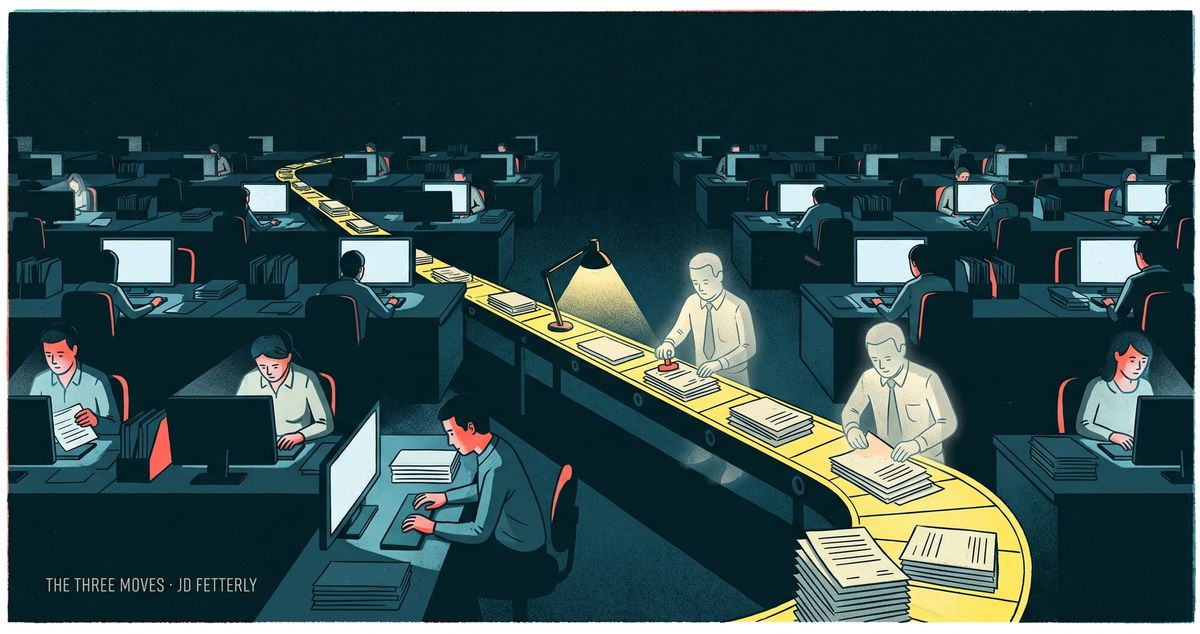
I asked a chief accounting officer where the manual work in her close actually lives. She didn’t name a process. She said it’s everything. Most of her team has been there a long time. They built manual processes that made sense at the time, grew up with those processes, layered in new systems, and somewhere along the way the process debt piled up and standards drifted.
As we reviewed the map of how her team works, she started listing what the treasure map had surfaced. Reconciliations between systems, run by hand. Credit checks with no policy behind them, so requests got thought through from scratch and run up the chain — the same amounts, approved the same way, over and over. A staff accountant downloading critical month-end close files, editing offline, and re-saving them — or forgetting to re-upload them, instead of working live in the shared drive. Things leadership had no line of sight to.
Then there was the revenue team. They were spending a few hours every close on a task that brought in about a thousand dollars of extra revenue. The task had always been done, so it kept being done. But for their business, every month is a quarter-end close — the big lift, twelve times a year — and close-week hours are the scarcest thing the team has. Once the work was visible, the decision took one sentence. Stop. Don’t do it anymore. It’s not worth the time or the effort.
That’s the first of three moves, and it’s the one that usually gets missed since it’s not the sexy part of transformation work. Stop, automate, redesign — stop gets passed over because it sounds like someone’s job is about to disappear, and because it’s politically harder than it looks.
The CAO’s list is what hidden factories of work look like — everything inside and around the boxes on the process map that never gets described. Ask people to walk you through their process and they’ll tell you how it should be done, not how it’s actually done.
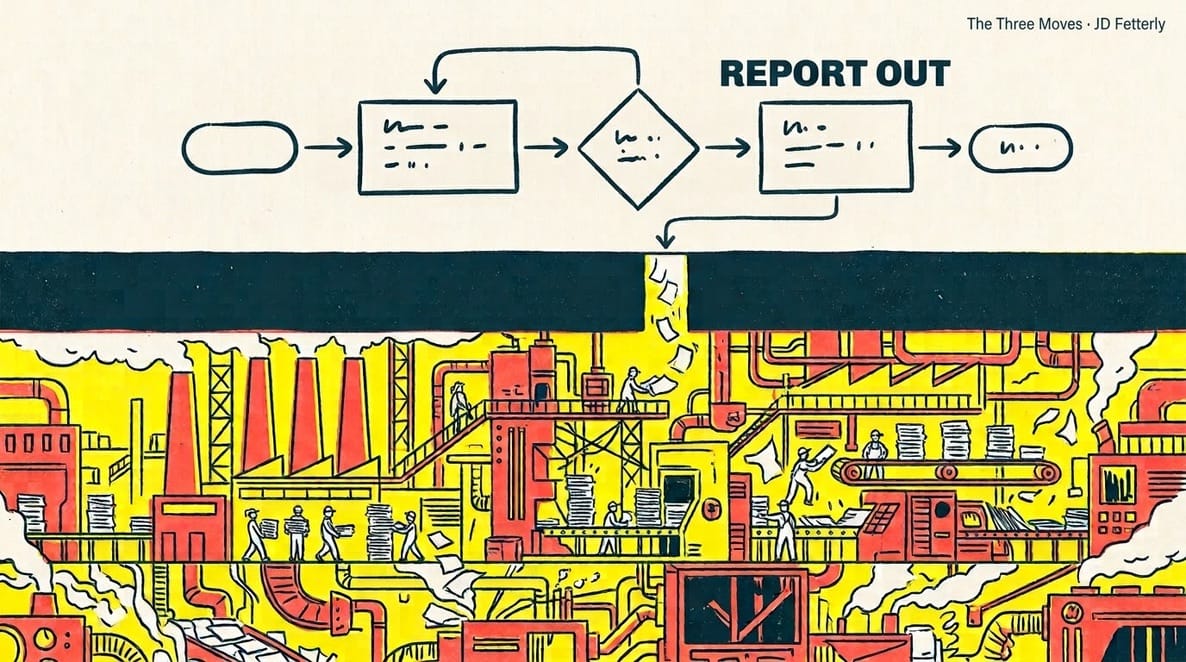
The box says “report out.” The factory behind it is three prep meetings and half a dozen people dropping their own work to feed a last-second ask before it goes in front of the SVP. You won’t find that by asking; you have to make the work visible.
When we mapped my own team’s work, we found 138 variants of tasks we thought were standard, and nobody was hiding anything. The factories were invisible from the level we’d been looking at.
Look back at the CAO’s list and you can see two shapes of stop. The revenue task was killed on the spot — no replacement, no project, gone. The credit checks pointed to a policy election instead: set a threshold, write it down, and let routine cases approve themselves. Neither requires a reorg or a change to anyone’s job. Both were only safe to decide because the work was visible — a map is the difference between stopping something and guessing. One removes work that never mattered much. The other removes judgment from cases where the answer is already known.
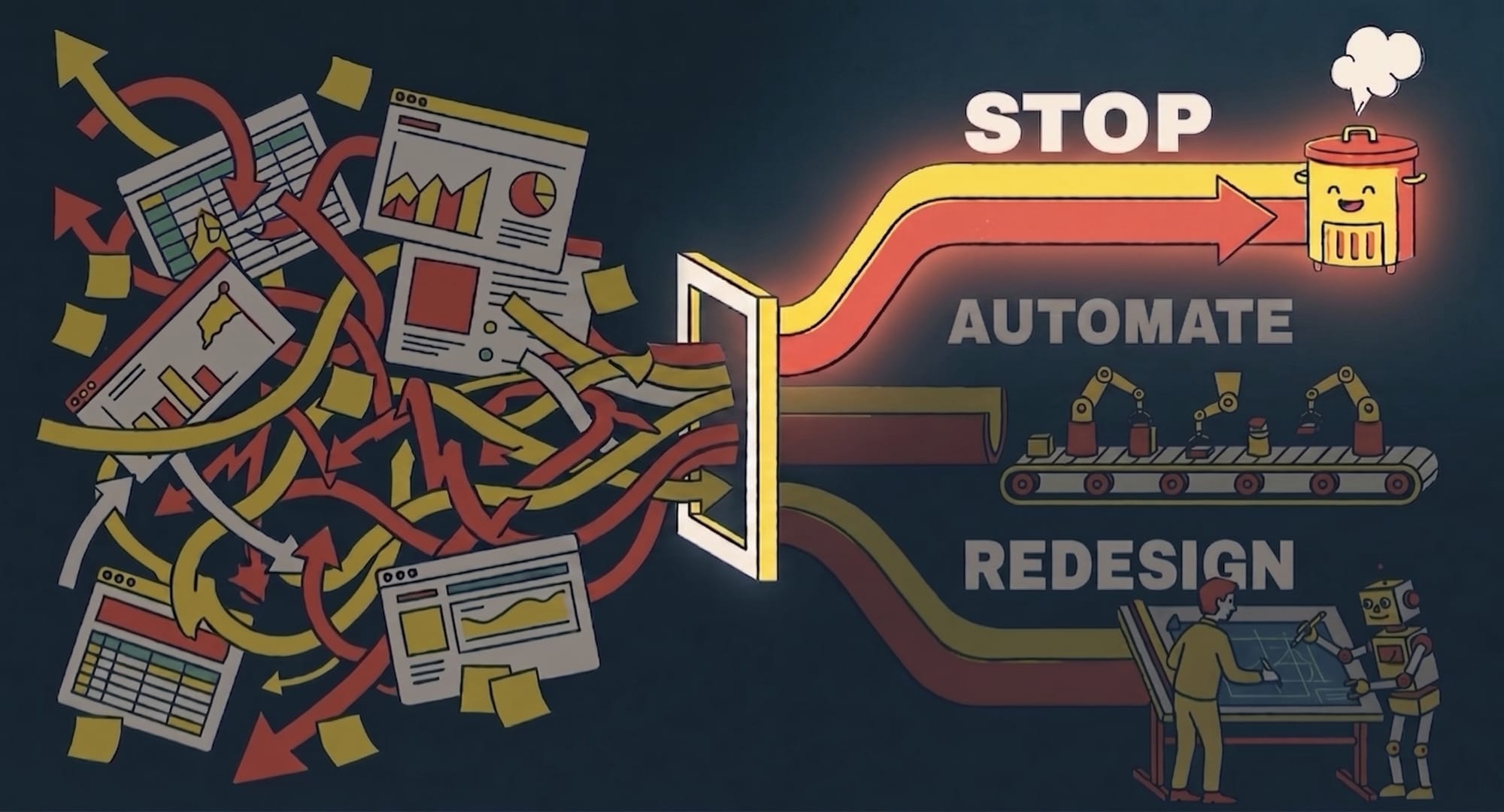
Why does so much of this work exist? Because a few hours a month is easy to pass off as just part of the process. It’s invisible to everyone except the person doing it, and killing something nobody can see has never been anyone’s job. So it lingers — the ghost of processes past, invisibly costing a team hours every month. A project ends, the budget moves on, and rarely is anyone left to close it out. The remnants get carried forward in tribal knowledge, one person handing them to the next, long after anyone remembers why.
You find out how much you have when a key person leaves — how much was person-driven rather than process-driven. A departure is the audit nobody scheduled.
The people doing this work usually know which parts don’t matter. I’d bet everyone reading this has done work like that: grinding through something you knew, while you were doing it, didn’t matter. That is the worst feeling a job can offer. When that work stops, attention goes back to the work that actually needs a person’s judgment, and to the human relationships that matter.
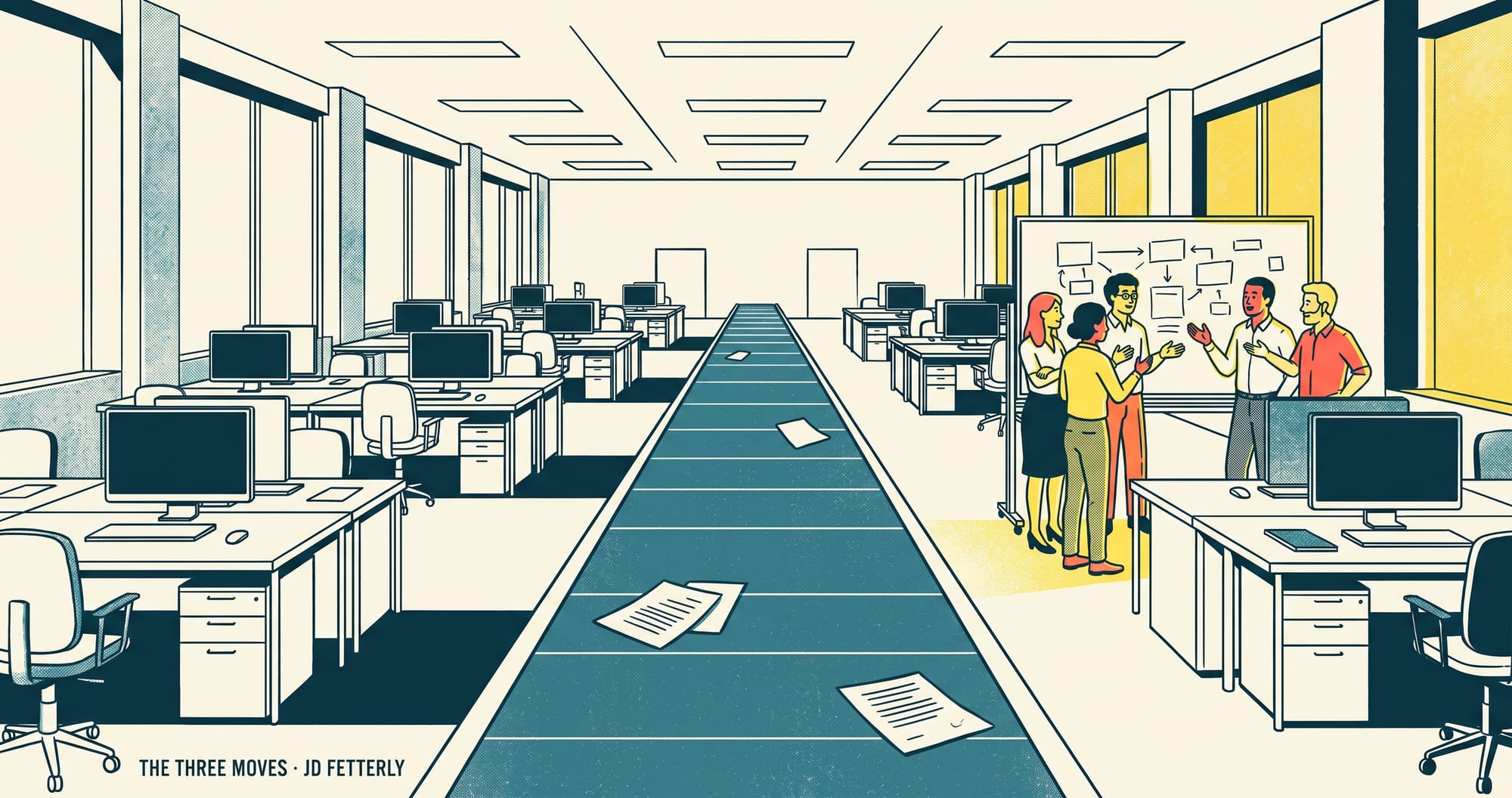
Not every task that survives should stay manual, though. Some of what’s left is valuable, has to be done, and is repetitive enough that no human should be spending attention on it either. That’s the second move, and it’s next week’s story.
This is part two of four. Subscribe for access to the rest of the series.