
In early 2025, I wanted my agents to be able to tell each other what they were working on. I had several custom GPTs, each with a different role, and I connected them to a Notion database where they could leave updates, record decisions I’d made, and assign each other work.
Getting that basic level of capability meant building a custom proxy and working around the ways tools expected humans to use them. I spent months cobbling together different versions of the setup. I still have the Markdown files in Google Drive. I was looking at them just a few weeks ago.
Deciding what needed to change
At Apple, I was building tools to help me get more out of meetings. I wanted to focus on talking to my partner teams and still have a useful record of the discussion afterward. I built a process that took a meeting recording, converted it to a transcript, and used a program to pull out a summary and action items. I was using tricks like triple-shot prompting and chain-of-thought instructions, then tuning the prompts to get the specific information I needed from different meeting types.
I knew which part of the meeting I wanted to handle myself: the conversation. If the tools could pull the decisions and next steps out of the recording afterward, I could listen without trying to write everything down.
Building a team in an afternoon
I’d spent several weeks building connections between agents, working out their instructions, and tuning prompts to get the information I needed. I’d learned a lot along the way.
Grokbot came out after I’d left Apple. It gave me a platform where I could create persistent agents and have them work together, so I built a team in an afternoon. Tuning took just a few days of production use. They now help manage parts of my day, including my commute and groceries.
These were different setups but similar conceptually. Grokbot simplified the scaffolding and complexity that I’d been continually refining over the last couple of years.
Teaching teams to direct the work
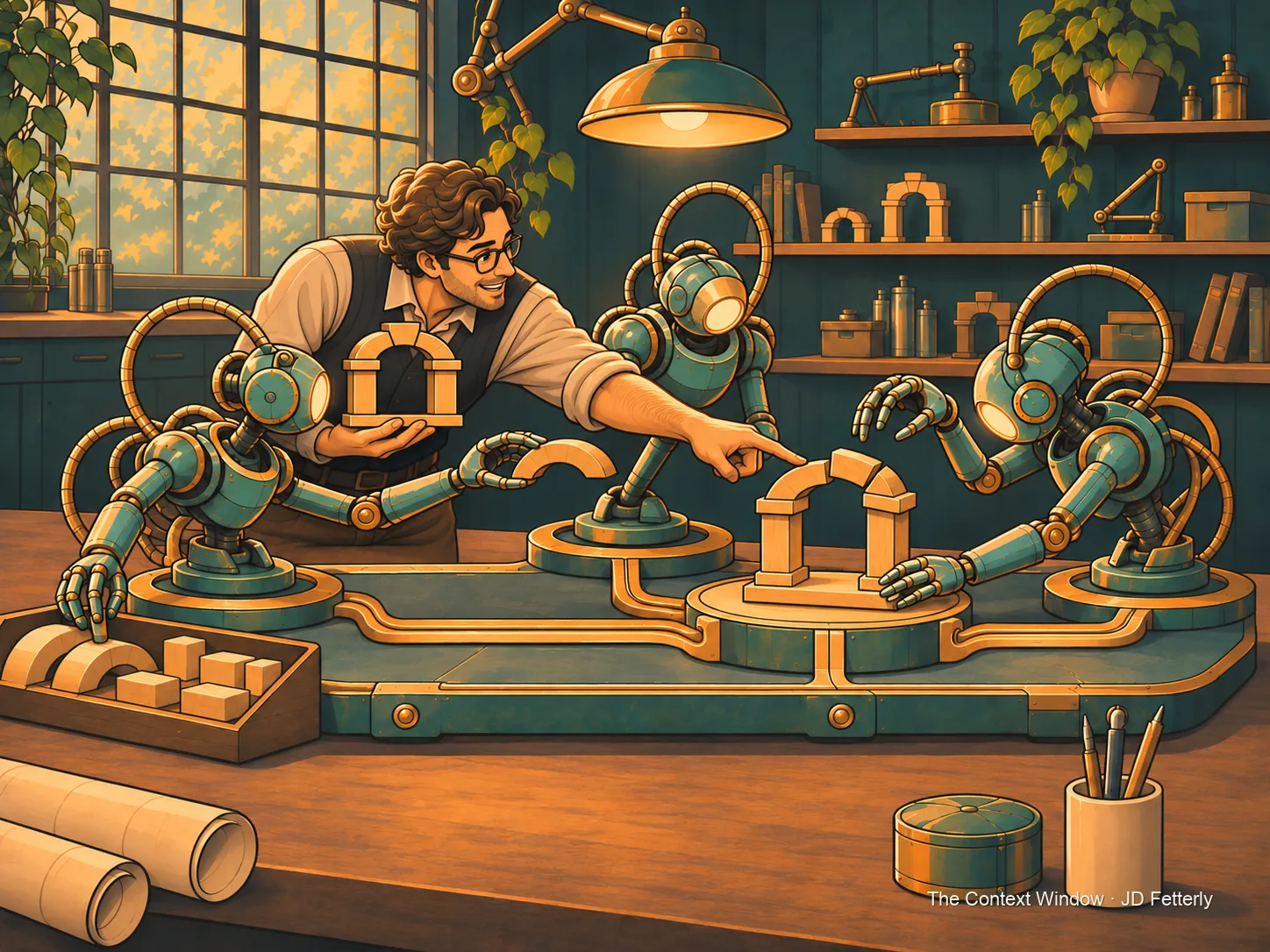
Less time on the scaffolding meant more time working out what I wanted the agents to do and how to guide them. For most of my career, I’ve led or taught transformation planning so people can make these types of decisions for themselves.
For some, it’s the first time they’ve seen a process map with their processes, and they can search through their data in ways they never could before. They’re excited, and the excitement needs to be focused.
The work starts with the outcomes they want to drive, then we look broadly, exploring opportunities to change the way work gets done. I teach them how to think about qualifying those opportunities.
One customer had already captured and defined its HR processes and wanted to develop the skills to explore that information. I hosted an executive transformation planning session and taught the team how to start with its goals and steer the agents toward those goals. The team began prompting independently and exploring the relationships between processes, teams, systems, and bottlenecks.
I often start with an agent skill they can use right away, then guide them through asking questions of their own data and working with the responses. They’re learning how to pull out information that helps them decide where an agent could make a difference, and how to keep that work tied to the outcomes they want.

Looking back at those Markdown files, I can see how much of my time went into getting agents to work together. Now more of that effort can go into deciding what I want to change in my work and how to guide the agents toward it.
That’s the opportunity I want teams to have as building gets easier. The skills and tools I give them are a starting point. They need to get their hands dirty building agents and learn how to use what they find in their data to make better decisions about their work.
The result I want to leave behind is a team that can keep going when I’m no longer in the room.